
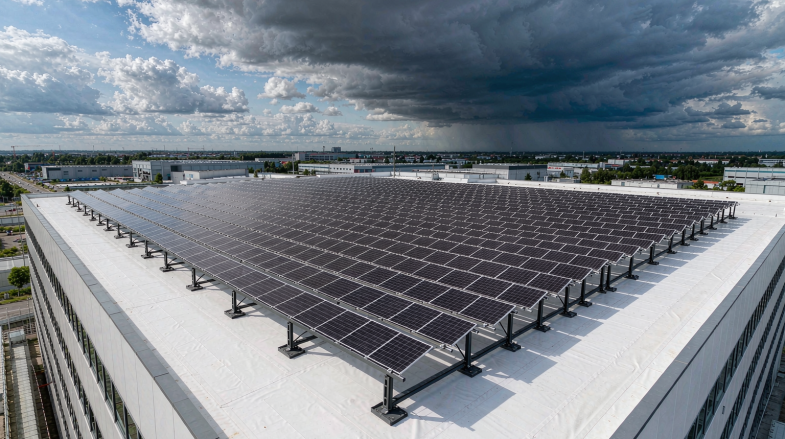
Wind uplift is the single most misunderstood load in commercial rooftop solar. Roofers understand it well — it is the force that lifts membrane corners, opens seams, and peels insulation boards on a badly fastened roof. Solar installers, however, often treat it as a number on a datasheet: multiply the design pressure by the module area, check that the ballast or attachment count is sufficient, and move on. On membrane roofs, that shortcut is exactly how systems fail. Understanding what wind uplift on membrane roof solar systems actually involves — and what the test data behind a mounting system really…
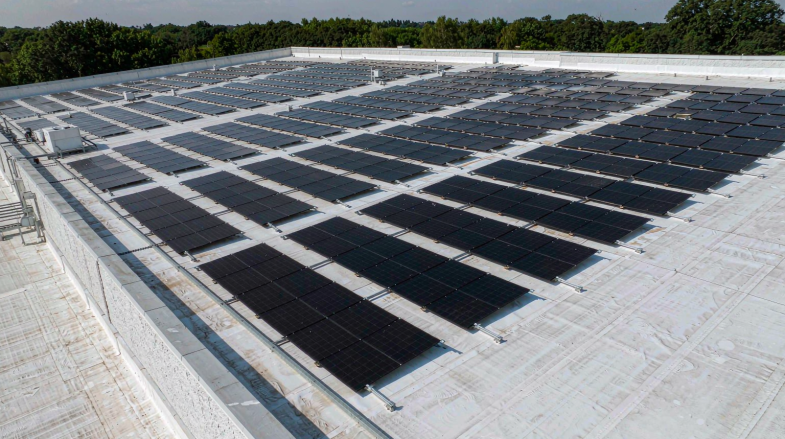
Lightweight flexible PV modules have moved from a niche product to a serious option for commercial solar, and flat membrane roofs are exactly where they make the most sense. Yet on TPO, PVC, EVA, and EPDM roofs, the way a flexible module is supported determines whether it delivers twenty years of stable output or quietly develops power-loss defects in its first rainy season. Understanding the real structural behavior of flexible solar panels on membrane roofs is therefore not a detail question. It decides system yield, roof warranty exposure, and the total cost of the project. For building owners evaluating a…

Compare penetrative versus welded attachments for membrane-roof solar. See how each affects leak risk, speed, wind design, and roof warranties early.
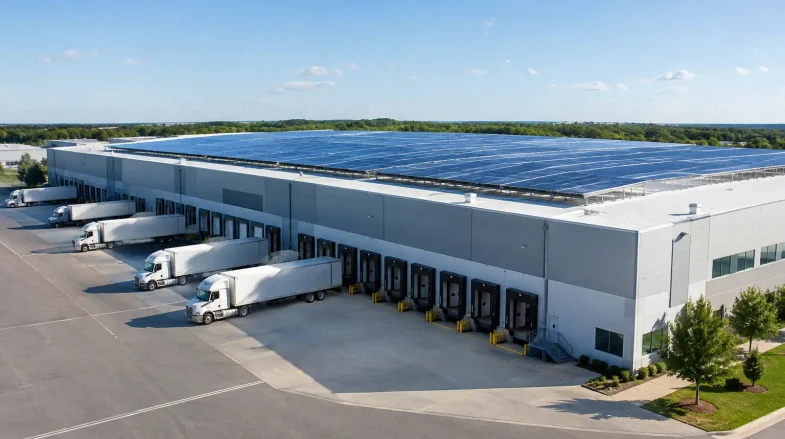
Distribution center photovoltaics demand more than module capacity. Specify roof-safe mounting, wind resistance, and rapid installation from day one.
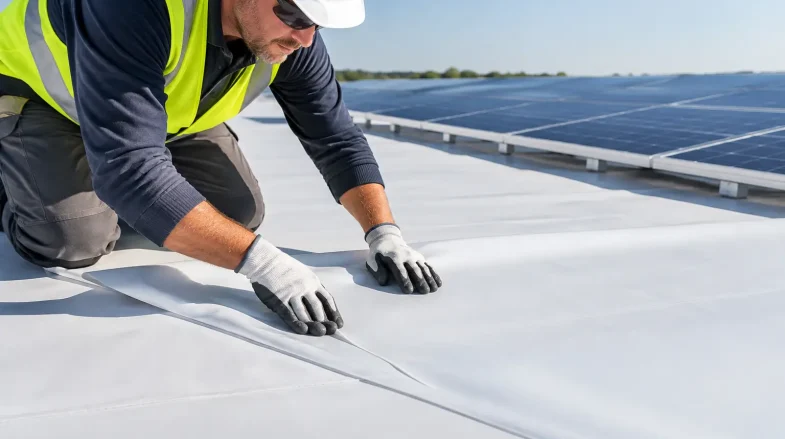
Learn how to protect TPO seams on solar projects with welded, no-penetration mounting that preserves waterproofing, installation speed, and high wind resistance.
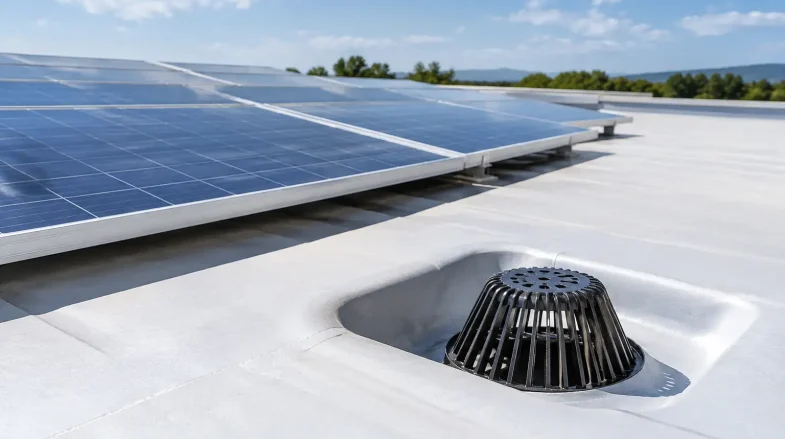
Rooftop drainage practices protect membrane roofs, preserve solar output, and reduce leak risk. Design clear flow paths before PV installation begins.
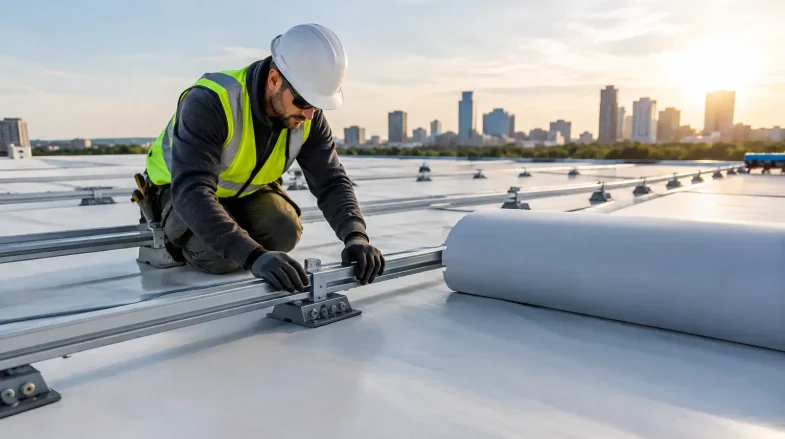
This membrane rail system review examines weld strength, roof compatibility, wind resistance, installation speed, and the trade-offs EPC teams should weigh.
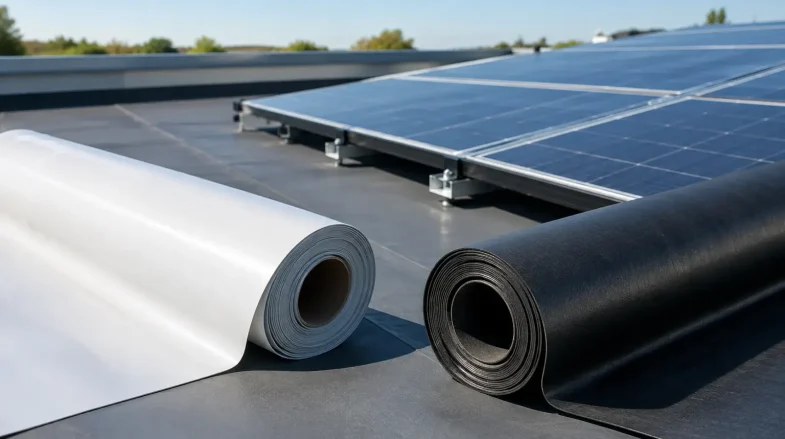
PVC versus EPDM compatibility determines whether a solar mounting detail protects the roof or creates chemical, seam, and warranty risk over time in use.
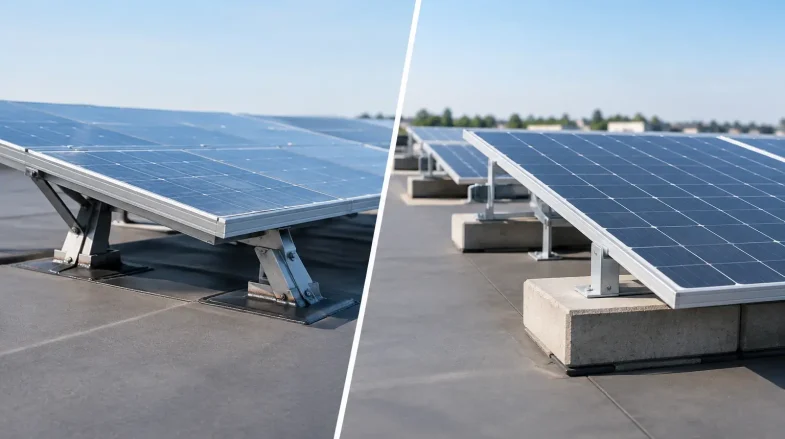
Compare welded versus ballasted mounting for membrane roofs, including wind loads, roof protection, structural limits, speed, lifecycle risk control.
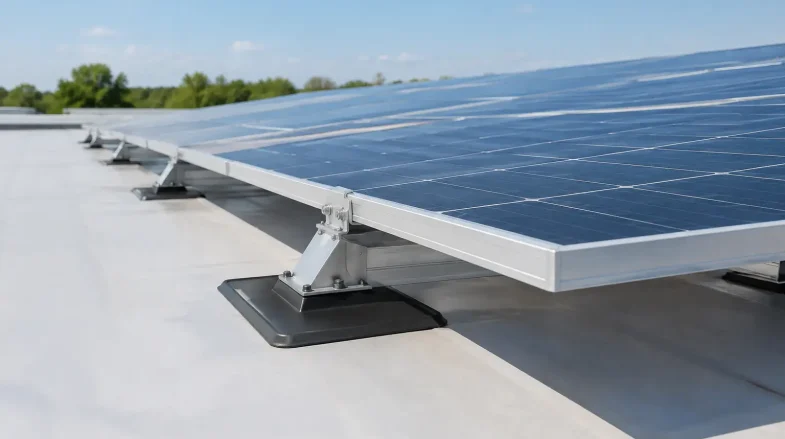
Solar mounts for membrane roofs must protect waterproofing while delivering fast installation, wind resistance, and reliable long-term PV performance.

