
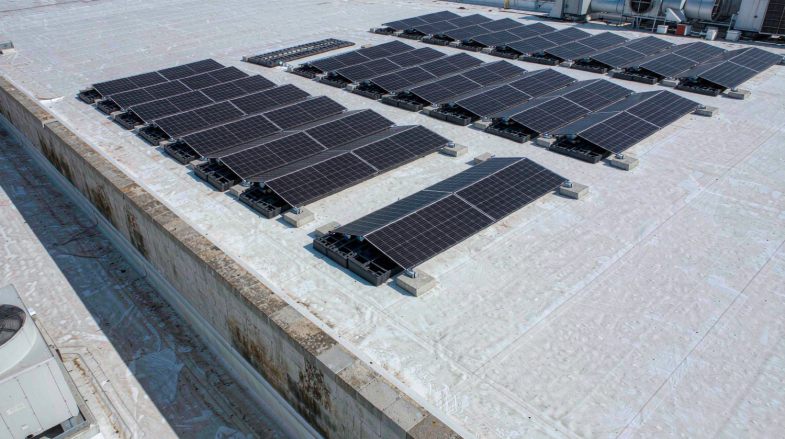
Weight is the oldest anchoring method in roofing. Long before anyone bolted a rail to a deck, rooftop equipment stayed in place because it was heavy enough not to move. On commercial membrane roofs that logic still appeals: no fasteners through the waterproofing, no warranty negotiations about penetrations, and installation crews that can position an array without touching the membrane at all. It is no accident that ballasted solar remains one of the most requested approaches for large low-slope roofs. Yet ballast is not a default setting. It is a trade — holding power traded against roof load, wind performance…
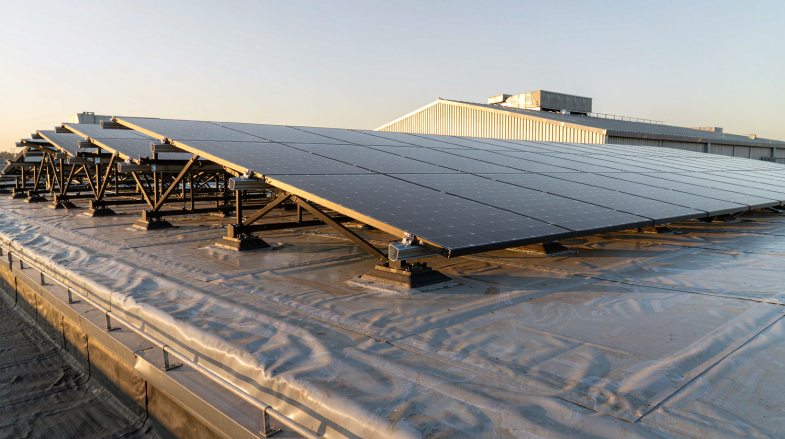
Every membrane roof moves. On a sunny afternoon a dark TPO sheet on a low-slope commercial building can reach 70–80°C at the surface, then fall to 15°C overnight — a swing of 50°C or more, repeated thousands of times across a twenty-year service life. Add the seasonal range and the waterproofing layer is in almost constant motion. A photovoltaic array fixed to that surface inherits the movement whether or not its designers planned for it. Most solar problems on membrane roofs are not caused by wind uplift or module defects. They are caused by restraint: a detail that holds the…
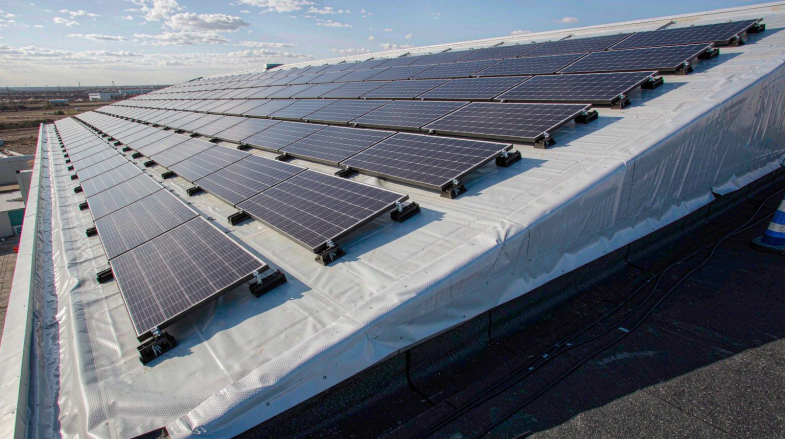
Rail-integrated mounting bases are quietly changing how engineers think about solar on commercial membrane roofs. Instead of dropping rails on top of generic pads or fastening through the waterproofing membrane, the RailBase™ system fuses the mounting rail and its base into a single factory-welded assembly, spreading loads across the membrane surface without a single penetration. For building owners weighing TPO, PVC, or EPDM roof systems against a photovoltaic investment, understanding how this integrated approach works — and where it outperforms conventional racking — is the difference between a roof that lasts its full service life and one that leaks two…
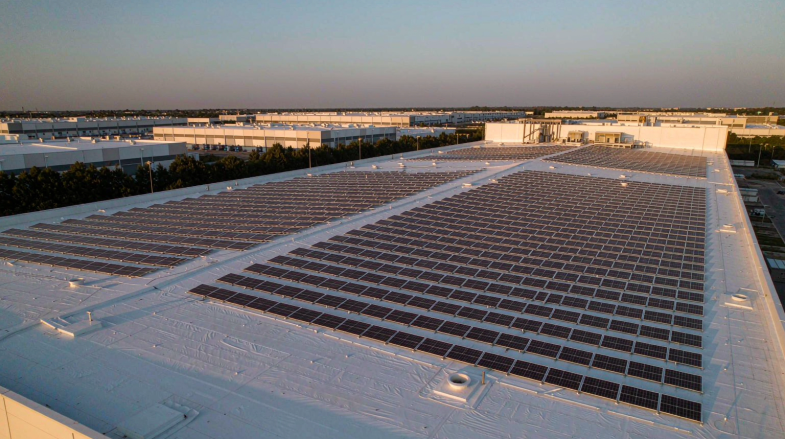
Commercial rooftop solar is usually sold on a single number: payback in years. That number is generally calculated correctly for what it measures, and almost always incomplete for what the building owner actually experiences. Two warehouses of identical size, in the same city, on the same tariff, can produce payback figures two years apart — and the gap is rarely explained by the price of modules. The difference sits in three places that a one-page proposal tends to compress into a single line: how the array attaches to the roof, how much of the generation the building actually consumes, and…
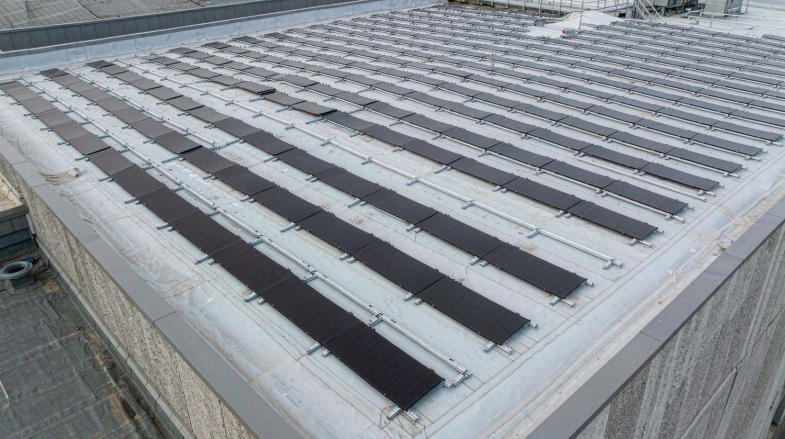
The most expensive mistake in commercial rooftop solar is not a mounting error, an undersized inverter, or a badly modelled yield curve. It is a scheduling decision made in a meeting room two years before anyone climbs onto the roof: installing photovoltaics on a membrane that has six years of service life left. On a warehouse or distribution centre, the membrane and the array are two assets with completely different clocks. A reinforced TPO or PVC membrane is typically warranted for fifteen to twenty years. A commercial PV array is financed, and expected to generate, for twenty-five. When those two…
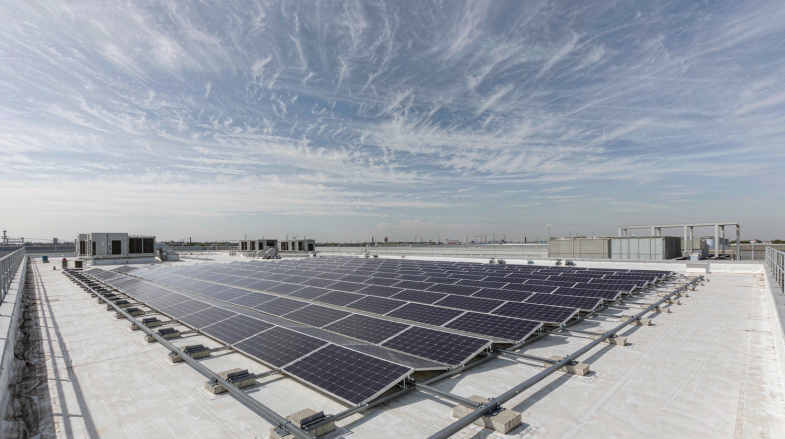
Adding photovoltaics to a commercial membrane roof is rarely blocked by the panels themselves. It is blocked by paperwork. More specifically, it is blocked by a warranty question that nobody answers clearly until the membrane has already been altered: does installing solar void the roof warranty? The honest answer is that it depends less on solar than on how the array touches the membrane. A ballasted array that rests on protection pads and a mechanically attached array that drives fasteners through the waterproofing layer are not the same risk event for a membrane manufacturer, even if they generate the same…
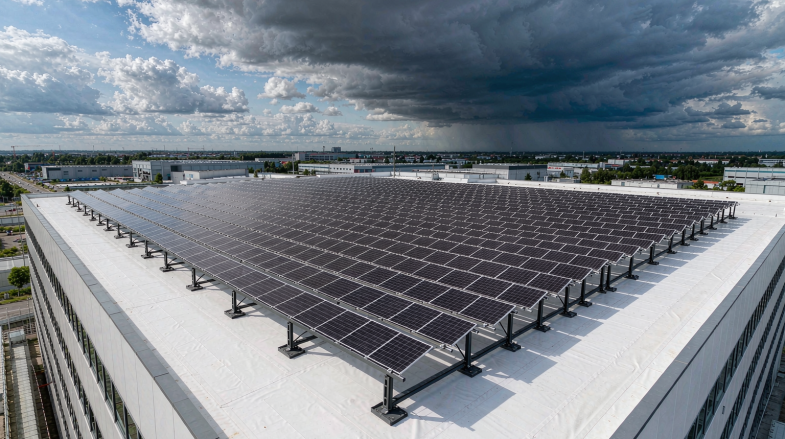
Wind uplift is the single most misunderstood load in commercial rooftop solar. Roofers understand it well — it is the force that lifts membrane corners, opens seams, and peels insulation boards on a badly fastened roof. Solar installers, however, often treat it as a number on a datasheet: multiply the design pressure by the module area, check that the ballast or attachment count is sufficient, and move on. On membrane roofs, that shortcut is exactly how systems fail. Understanding what wind uplift on membrane roof solar systems actually involves — and what the test data behind a mounting system really…
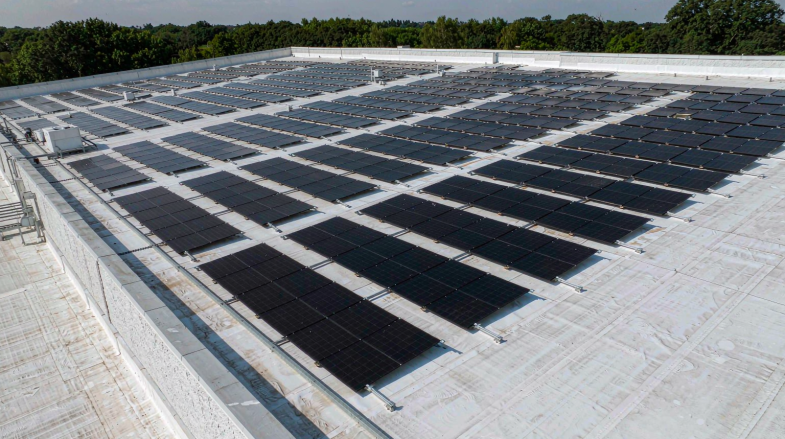
Lightweight flexible PV modules have moved from a niche product to a serious option for commercial solar, and flat membrane roofs are exactly where they make the most sense. Yet on TPO, PVC, EVA, and EPDM roofs, the way a flexible module is supported determines whether it delivers twenty years of stable output or quietly develops power-loss defects in its first rainy season. Understanding the real structural behavior of flexible solar panels on membrane roofs is therefore not a detail question. It decides system yield, roof warranty exposure, and the total cost of the project. For building owners evaluating a…
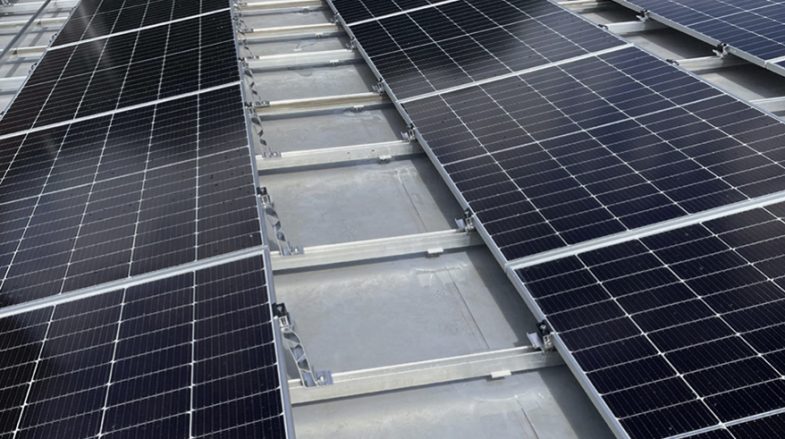
Compare penetrative versus welded attachments for membrane-roof solar. See how each affects leak risk, speed, wind design, and roof warranties early.
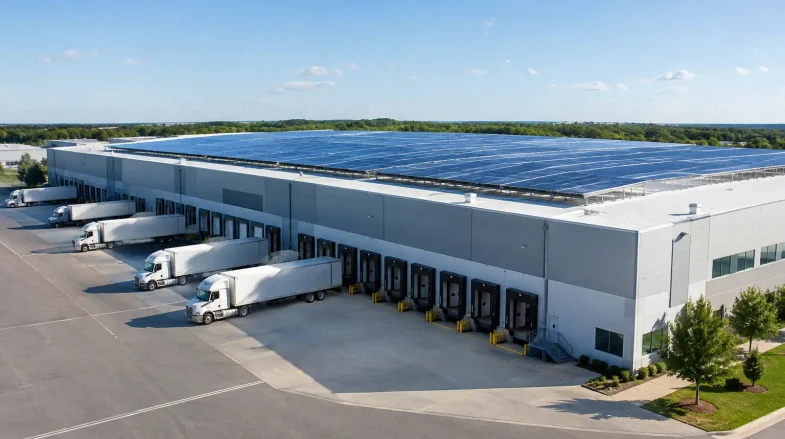
Distribution center photovoltaics demand more than module capacity. Specify roof-safe mounting, wind resistance, and rapid installation from day one.